
EN / FR
Skip to main content

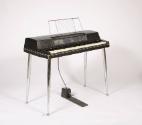
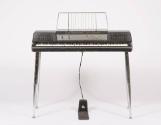
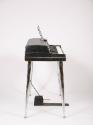
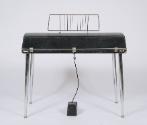
Wurlitzer 200

Available for use in Recording Studios
Not currently on exhibit
Artifact TypePiano, Electromechanical
Manufacturer LocationUSA, North America
Datec. 1970
One of the most widely used keyboard instruments of the ’60s and ’70s, the Wurlitzer 200 is featured on such classic cuts as Supertramp’s “Dreamer,” The Guess Who’s “These Eyes” and Pink Floyd’s “Money,” as well as on Beck’s 1996 album, Odelay. Combining the tone-producing mechanisms of instruments like the glockenspiel with the hammer mechanism of the conventional piano, the electric piano was highly prized for its unique tone and portability.
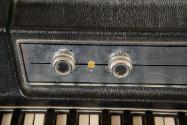
Operation/FunctionThis particular artifact is an example of the standard model 200 from the 200 series of Wurlitzer electric pianos, and was built for professional users with portability in mind. It incorporates a solid-state amplifier and two 4” x 8”, 16 ohm mounted oval speakers. The instrument has a compass of 64 notes (A through C), with the naturals made of sugar pine wood and covered with white Implex plastic, and the accidentals made of black molded plastic. There is one steel metal reed placed above each hammer, varying in length to correspond with the desired pitch. The piano action employed by the instrument was manufactured by the designer, and contains many of the standard regulating components in a traditional piano action. Hammers are constructed of three-ply maple wood and are covered with felt at their tips. The instrument also contains built-in vibrato with corresponding knob, a master volume knob that also serves as the main on/off control, dampers with corresponding sustain pedal that is also detachable (connected via a Bowden cable), a 1/4” headphone jack, and an auxiliary 1/4” jack.Cultural SignificanceThe Wurlitzer 200 and its successor, the model 200A, are among the most widely used electronic instruments in popular music. In addition to instruments such as the Fender Rhodes electric piano, the Hammond B-3, and the Hohner Clavinet, they make up what are often referred to as the “classic” keyboard instruments of the 1960s and 1970s. Thanks to the combination of a portable and lightweight design and a unique sound, they remained among the most revered instruments of the era, employed by numerous musicians both in live and studio contexts. Their popularity has not waned significantly since the 1960s, with many musicians still desiring their tone and lauding their ease of use. Although the electric piano has perhaps not had as groundbreaking an impact on the development of music as the electric guitar did in the 1950s, its use has spanned multiple genres, with the most prevalent examples occurring in rock- and jazz-based compositions. Just as the electric guitar had been originally developed for use with jazz combos – amplification emerging as a technical rather than aesthetic necessity so that the instrument could be heard among a large group of instruments – the electric piano was first popularized in the jazz scene of the late 1950s, with musicians as varied as Ray Charles and Sun Ra featuring early instantiations of the instrument in recordings and performances. Although instruments such as the Wurlitzer 200 and Fender Rhodes electric piano were unique in their use of metal reeds and metal tonebars instead of strings, the percussive, bell-like sound generated by these instruments had been present for nearly a century prior in instruments such as the Dulcitone and celesta. The celesta in particular enjoyed extensive usage throughout the late nineteenth and early twentieth centuries, revered for its whimsical sonic properties and scored in a range of classical and jazz compositions, such as Tchaikovsky’s The Nutcracker of 1892. Although the Wurlitzer 200 employs a similar hammer mechanism to that of the conventional acoustic piano, its use of metal reeds gives it a highly distinct and idiomatic sound; as such, the instrument has maintained its reputation as a unique alternative to the piano. One particularly unusual feature of Wurlitzer’s design approach was their interest in producing a series of electric pianos that could function as teaching aids. Throughout the 1960s and 1970s, scores of universities and colleges throughout the United States employed Wurlitzer teaching and student consoles. Many modern software sampler manufacturers have sought to emulate the instrument’s sound and qualities.Technological SignificanceWhen solid body electric guitars such as the Fender Telecaster and Gibson Les Paul emerged in the early 1950s, they revolutionized use of the instrument in popular music. Although iconic electric pianos such as the Wurlitzer 200 and Fender Rhodes Mk I, which were produced in the late 1960s and early 1970s, were not quite as transformative, they certainly solidified a position as one of the most widely used keyboard instruments in popular music. The first electric pianos were designed in the 1920s, with one of the earliest examples emerging from the Berlin-based C. Bechstein piano manufacturers. Their Neo-Bechstein grand piano, which was developed in the late 1920s and produced into the early 1930s, removed the instrument’s soundboard and implemented a series of magnetic coils, essentially an early version of the pickup. Interestingly, the instrument also featured a built-in radio receiver and an external loudspeaker cabinet with an integrated record player; as such, the unit was meant to appeal to the commercial market as a sort of all-in-one home entertainment product. In the 1930s, inventor Benjamin Meissner developed an amplified vertical piano, patenting the pickup mechanism that was later used in most of the electric pianos of the 1960s and 1970s. Other early electric pianos include the Story & Clark Storytone of 1939, which weighed in at nearly half a ton. The most technologically innovative feature of electric pianos such as the Wurlitzer 200 is with respect to their use of variously fashioned metal bars instead of the strings that characterize a conventional piano. On account of this, the Wurlitzer 200 can be seen as a closer relative to acoustic instruments such as the Dulcitone, celesta, and glockenspiel, all of which employ metal bars activated by hammers. The Dulcitone was the first of these instruments, designed and manufactured by Thomas Machell & Sons of Glasgow, Scotland in the 1880s. The instrument featured felt-covered hammers and a keyboard as well as a series of metal tuning forks as the tone generators. Unlike the strings of a traditional piano, which require a specific amount of maintained tension in order to stay in tune, the Dulcitone was far more stable in this regard. The celesta, effectively a keyboard-controlled glockenspiel, followed in 1886 from French organ builder, Auguste Mustel, and featured an improved resonating mechanism, allowing it to produce a much louder sound than the Dulcitone. As such, the instrument has been regularly used in a number of orchestral and chamber settings, by composers ranging from Tchaikovsky to Morton Feldman. The Fender Rhodes electric pianos directly continued this tradition, implementing an assembly that employs a metal tine and tonebar oriented as a tuning fork, however Wurlitzer electric pianos featured a modified tone generator design consisting in singular flat, tapered pieces of metal. These pieces of metal are more commonly referred to as reeds on account of their similar shape to the wooden reeds used in many woodwind and brass instruments, as well as those used in reed organs. Of course, the primary distinction between the Wurlitzer 200 and Fender Rhodes electric pianos, and predecessors such as the Dulcitone and celesta is that the former employ built-in electric amplification. As with most electromechanical instruments, this is achieved through the use of a set of pickups, which are types of transducers similar to microphones. A pickup consists in a permanent magnet (a single magnet that achieves the same effect of two polarized magnets) that maintains a constant electromagnetic field, and a coil of copper wire that is wrapped around the magnet. The tone-generating component of the electric musical instrument – in the case of the Wurlitzer 200, the reeds – is placed near the magnet. When the tone generator vibrates, a disturbance is created in the electromagnetic field, which in turn induces a voltage in the coil. This electrical signal is then sent to an amplification system, generally consisting in a preamplifier, amplifier, and loudspeaker. Most modern pickups come in the form of the humbucker pickup, which employs two coils in inverse phase so as to reduce the amount of extraneous noise or AC hum included in the signal. The first dedicated pickup was designed by Hawaiian steel-guitar player, George Beauchamp, in collaboration with Adolph Rickenbacker in the early 1930s. The use of pickups rendered any need for a hollow wooden soundboard or resonating structure obsolete in associated instruments, as reflected in the design of the solid-body electric guitar. Of course, the use of pickups also meant that the conventional tone of the acoustic instruments to which they were applied, such as guitars, pianos, and harpsichords, could be modified through the use of external effects pedals and amplification systems. In addition to those employing reeds and tonebars, electric pianos were also designed in a more conventional manner, integrating strings and pickups into a basic piano frame, as in the Yamaha CP-70, which is still required to maintain proper tension in the instrument’s strings. Other string-based electric pianos, such as the Hohner Clavinet, feature a more streamlined design and forego the piano frame altogether. In the late 1960s, Hohner also produced the Electra-Piano (not to be confused with the RMI Electrapiano), which features a similar reed-based tone generator to that used in the Wurlitzer 200 and hammer action to that used in the Fender Rhodes electric piano. Perhaps the most notable user of this instrument was John Paul Jones of Led Zeppelin, who employed the instrument on tracks such as “Stairway to Heaven” and “Misty Mountain Hop” from IV (1971) and “No Quarter” from Houses of the Holy (1973), the latter of which featured the instrument being processed by an EMS VCS3 synthesizer to produce the warbling tremolo effect characteristic of the Fender Rhodes electric piano. Instruments such as the Hohner Pianet and Baldwin electric harpsichord are often referred to as electric pianos, however, strictly speaking, they ought not be classified with such instruments as they employ a plucked mechanism, similar to that of the harpsichord, rather than the striking mechanism that defines the piano. One unique aspect of the electric guitar is that its tone can be significantly altered through the use of multiple pickups and effects, making it in some cases unrecognizable from its acoustic predecessor. Although the same processing can be applied to electric pianos, instruments such as the Wurlitzer 200 are recognized as already inherently offering an alternative sound to that of the traditional string-based piano. As such, when considered specifically in terms of sound, they are often viewed not primarily as a variation of the electric piano, but as an independent instrument with a distinct identity. The implementation of pickups into these instruments was vital not only in defining their sound, but also the nature of their external construction. With the necessity for a resonating soundboard and bulky supporting frame eliminated, electric pianos – and particularly those employing metal bars or reeds instead of strings – could be constructed to be much more compact and light weight. While the first electric pianos of the 1950s still relied on wood as the primary construction material, most models of the Wurlitzer 200 and Fender Rhodes electric pianos incorporated plastics, making the instruments cheaper, more durable, and significantly more portable. The Wurlitzer 200 is often considered to be the most portable of the classic keyboard instruments of the 1960s and 1970s, especially when compared to the excessively bulky electromechanical and combo organs of the era, but perhaps also more so than similar instruments offered under the Fender Rhodes line. The two instruments share a similar sound in their use of metal bars, however the specific mechanisms behind their tone generator is markedly different, with the Fender Rhodes instruments employing something more similar to a tuning fork than the flat metal reeds used in Wurlitzer instruments. Although Wurlitzer designed most of their electric pianos with portability in mind, incorporating removable legs and pedal and a streamlined structure, the introduction of the series 200 in 1968 signaled a departure from previous Wurlitzer electric pianos in that the former were designed with plastic instead of plywood exteriors, making them noticeably lighter. Wurlitzer designed their first electric piano in 1954, which was known as the 110, and followed with two more models in 1955, the 111 and 112. As a unit, these models comprised the first representatives of the 100 series. Subsequent models had the sustain pedal located underneath the instrument, however these early models of the mid 1950s employed a connection located on the side of the instrument. These early models were also void of the vibrato effect that would come to characterize the sound of later models. As with most electronic instruments of the era, prior to the early 1960s, all models used vacuum tube-based circuitry. A vacuum tube, or valve as they are commonly called, is a device that directs the flow of electric current through a vacuum within a sealed container. They were used as a fundamental component of electronic technology throughout the first half of the twentieth century, until they were replaced by solid-state transistors and related devices in the 1950s and 1960s. The model 140B, which was introduced in 1962, was the first Wurlitzer electric piano to employ solid-state (i.e. transistorized) circuitry. It remained the most popular of their instruments until the development of the 200 series in 1968. As aforementioned, the 200 series instruments were particularly distinct in that they used a plastic external body. Unlike their predecessors, the 200 series also implemented two small loudspeakers onto the front of the instrument, facing the player. The 200A series followed in 1972 with improvements in the signal-to-noise ratio of the instruments tone generation mechanism. The 200B series, which emerged in 1978, was the final series of electric pianos Wurlitzer developed, and was unique in that its instruments were battery-powered and lacked internal speakers. Within each series, Wurlitzer designed both portable and console versions of the instrument; the iconic models 200 and 200A are examples of the portable offerings. Console models were designed for use in classroom settings, often with one made uniquely for the teacher (model 207) and several made for students (model 206). The teacher’s unit came with a built-in headphone that would allow him or her to monitor each student’s activities on their instrument. Up to 48 student units could be connected to a single teacher unit, with each student working at their instrument with a pair of onboard headphones. These instruments were built upon an attached base that usually contained the pedal and internal loudspeaker. Standalone classroom units (models 214 and 215), consoles intended for home or live use (models 203 and 210), and consoles employing a wooden exterior (700 series) were also developed. Every Wurlitzer electric piano employed a 64-note keyboard with the exception of the model 106P of the early 1970s. Technically considered a member of the 200 series, the 106P was a 44-note classroom model that lacked vibrato control and sustain. Most interestingly, however, the 106P was built into a collapsible frame, making it perhaps the most portable of all Wurlitzer electric pianos. In addition to the more common structures used in the 200 and 200A series, Wurlitzer also designed a number of spinet-style units, a unit for exclusive use in the German market (model 300), and a version of the model 200 that is housed within the external structure of a baby grand piano (model 270). The latter instrument was dubbed the “butterfly” piano in reference to its two lids, which opened from the centre of the instrument outward at an angle, not unlike the wings of a butterfly. Naturally, this instrument is the heaviest of all Wurlitzer electric pianos. Perhaps the main drawback of Wurlitzer’s reed-based tone-generating mechanism is that the reeds tend to fatigue fairly easily from over use and heavy-handed playing, resulting either the reeds detuning or simply breaking.Users/PerformersThere are countless examples of both the model 200 and 200A in recorded and live music, spanning from the late 1960s until the present, with most usage occurring in various rock- and jazz-based genres. Unlike a good deal of most vintage equipment from the era, the Wurlitzer 200 and 200A are unique in that they have been used extensively both by professionals and amateur musicians. Among the most recognizable albums and compositions to feature the instrument include: many hits from English rock group Supertramp’s seminal Breakfast in America and Crime of the Century albums of 1979 and 1974, respectively, such as “Dreamer”, “The Logical Song”, “Goodbye Stranger”, and “Bloody Well Right”; “These Eyes” from Canadian rock group The Guess Who’s Wheatfield Soul of 1969; Queen’s “You’re My Best Friend” from A Night at the Opera of 1975; Pink Floyd’s “Time” and “Money” from the hugely successful Dark Side of the Moon of 1973 and “Have a Cigar” from 1975’s Wish You Were Here; and, Steely Dan’s iconic hits, “Do It Again” and “Dirty Work”, from Can’t Buy a Thrill of 1972.
Object numberT.2016.22.01
Photo credit: Don Kennedy
CBS Musical Instruments
1966
Available for use in Recording Studios
On View: Not currently on exhibit
isVirtual:
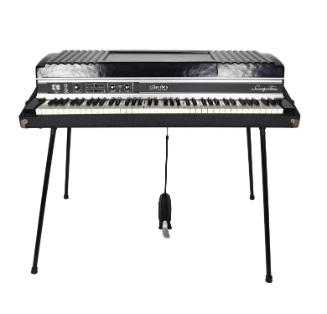
Photo credit: Meghan MacKrous, courtesy of the National Music Centre
CBS Musical Instruments
c. 1980
Available for use in Recording Studios
On View: Not currently on exhibit
isVirtual:
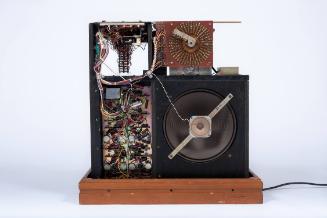
Photo credit: Don Kennedy
The Wurlitzer Company
c. 1959
Not available for use in Recording Studios
On View: On exhibit
isVirtual:
Photo credit: Don Kennedy
Hammond Organ Company
1957
Not available for use in Recording Studios
On View: Not currently on exhibit
isVirtual:
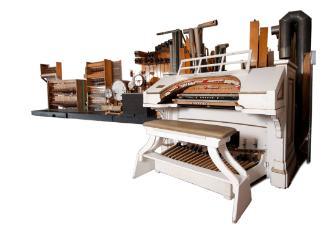
Photo credit: Don Kennedy
Kimball Piano and Organ Company
1924
Not available for use in Recording Studios
On View: On exhibit
isVirtual:
Photo credit: Don Kennedy
Hohner Musikinstrumente GmbH & Co. KG
c. 1967
Available for use in Recording Studios
On View: Not currently on exhibit
isVirtual:
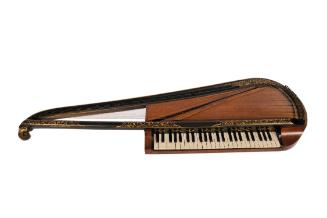
Photo credit: Don Kennedy
Carl (Karl) Leopold Röllig
c. 1800
Not available for use in Recording Studios
On View: Not currently on exhibit
isVirtual:
Bösendorfer Klavierfabrik GmbH
1855
Not available for use in Recording Studios
On View: Not currently on exhibit
isVirtual:
Photo credit: Don Kennedy
Drum Workshop, Inc.
2009
Not available for use in Recording Studios
On View: On exhibit
isVirtual:
Photo credit: Don Kennedy
Frank Morse Robb
1937
Not available for use in Recording Studios
On View: On exhibit
isVirtual:
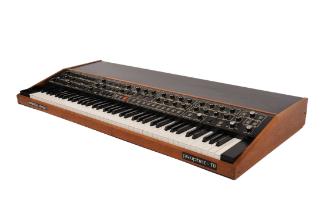
Photo credit: Don Kennedy
Sequential Circuits Inc.
1983
Available for use in Recording Studios
On View: Not currently on exhibit
isVirtual:
Photo credit: Don Kennedy
Hohner Musikinstrumente GmbH & Co. KG
c. 1966
Available for use in Recording Studios
On View: Not currently on exhibit
isVirtual:
Back