EN / FR
Skip to main content

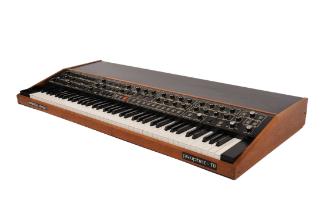
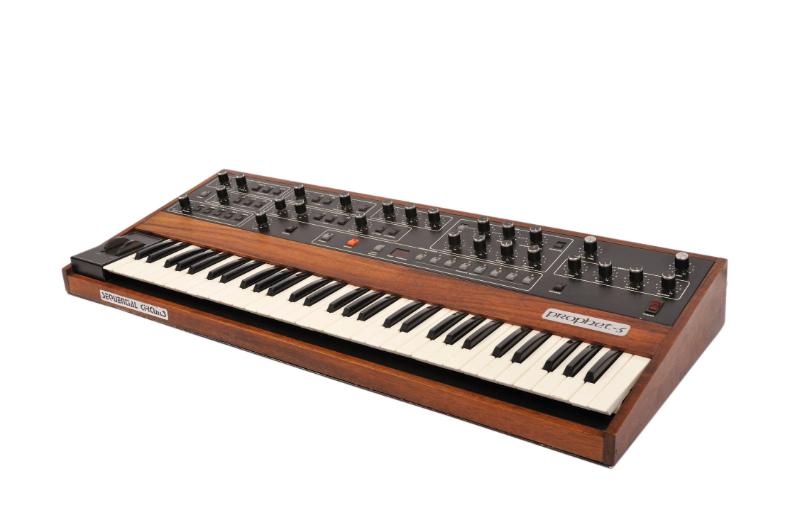
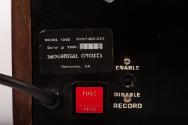
Sequential Circuits Prophet 5

Available for use in Recording Studios
Not currently on exhibit
Artifact TypeSynthesizer
Manufacturer LocationUSA, North America
Datec. 1978
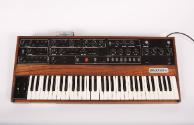
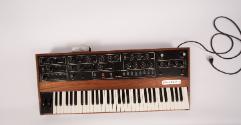
Prized for its rich sound quality and technological innovations, the Prophet 5 was used by such musical titans as Michael Jackson, Pink Floyd, Kate Bush, and Talking Heads—as well as on the soundtrack for the 80’s dystopian flick, Blade Runner. It was the first true “hybrid” instrument to use a dedicated microprocessor along with analog sound generation. The instrument’s designer, Dave Smith, also coined the term MIDI, or Musical Instrument Digital Interface—still the industry standard for how electronic instruments communicate with one another.
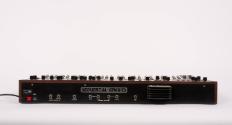
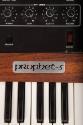
Operation/FunctionThe Sequential Circuits Prophet 5 is a digital-analog synthesizer that features five-voice polyphony across its 61-note chromatic keyboard. Each of the five voices in the single voice card contains two voltage-controlled oscillators that function via SSM (Solid State Music) integrated circuits, or chips. Available waveforms consist of square, triangle, and sawtooth for oscillator B, and sawtooth and square for oscillator A. There is an additional LFO (low frequency oscillator) on board, which is capable of modulating the filter, or the pulse width or frequency of the oscillators. Other features include a standard voltage-controlled 24 dB/octave four pole low-pass resonant filter with dedicated ADSR envelope, a voltage-controlled amplifier with ADSR, CV/gate external control inputs, a white noise generator, portamento/glide, wheels for pitch bend and modulation, and an onboard ‘Poly-Mod’ function that allows for extended signal modulation. The Prophet 5 does not contain a built-in sequencer, and the keyboard does not feature aftertouch or velocity sensitivity. Rev 1 Prophet 5s are capable of housing 64 patches in programmable memory (eight banks each with eight programs), while later revisions were capable of extending this capacity to around 128 patches. Front panel functions are controlled via a series of knobs and push button switches; each switch features an LED to indicate whether it is active or not.Cultural SignificanceThe Prophet 5 remains one of the most iconic synthesizers of all time, both in its technological design and in its cultural import. It has been used on countless recordings and soundtracks, and spans usage in virtually every musical genre. Although the Prophet 5 was not a particularly inexpensive instrument, it was among one of the first to offer a high degree of sophistication for a relatively affordable price. In fact, it was at the time of its release cheaper than the comparable Yamaha CS80, which, along with the Oberheim Four and Eight Voice instruments, was the only other viable commercial competitor in the era of early polyphony. Although the advent of synthesizers that employ both digital control and sound production in the mid 1980s rendered most hybrid instruments technologically obsolete, the Prophet 5 has remained highly sought after, and is revered for its incomparable sound quality.Technological SignificanceThe synthesizer is arguably one of, if not the most technologically significant contributions to the course of electronic music. Although earlier electronic instruments such as the Theremin, Clavivox, and Ondes Martenot offered new and unique ways of articulating sound, their sonic template was, for the most part, quite limited, capable of producing only a few distinct timbres. The modern synthesizer, on the other hand, was viewed as an integrated electronic orchestra, as it were, allowing the user to sculpt a wide and varied array of tones and gestures. What’s more, it allowed the user to modify their sounds in real time, seemingly without the sorts of physical limitations imposed on acoustic instruments. Of course, each instrument did come with its own characteristic tonal qualities and control limitations, however the wealth of opportunity inherent in the ability to manipulate and define nearly every parameter of sound structure solidified the synthesizer’s place as one of the most powerful musical innovations of the twentieth century. The concept of modular design was initially quite desirable to professional and studio musicians in that it allowed one to more or less completely customize their instrument and modify its functions as desired. Although modular-type systems are still in production today ¬– the Buchla 200e, for instance, is based on the modular design of the Buchla 200 analog system – the advent of affordable eight-bit microprocessor-based integrated circuitry in the mid 1970s and the rise of programmable polyphonic instruments in the late 1970s resulted in the relative obsolescence of the discrete transistor-based systems of the early 1970s. Synthesizers increasingly began to adopt the smaller, more compact aesthetic exhibited in these performance-oriented instruments, especially that of the revered Minimoog. The once popular modular approach gave way to more streamlined designs that, while still offering users the ability to control numerous aspects of the instrument’s tone and gesture, limited the way in which the instrument could be operated. Although the modular synthesizer was highly regarded for its flexibility, it was also criticized for being largely unintuitive and cumbersome in its patching schemes; the smaller, integrated digital-analog hybrids of the late 1970s, such as the Prophet 5, though still not relatively inexpensive, responded more readily to the technological demands of an increasingly burgeoning consumer market. In the early 1970s, integrated circuits emerged in synthesizers, housing the many discrete components of transistor-based circuits within a single silicon chip, as they are often called. Integrated circuits were significantly smaller and less expensive to manufacture than the circuits from which they derived. With the introduction of the first affordable eight-bit microprocessors in the mid 1970s, such as the Zilog Z80, integrated circuits adapted to incorporate more sophisticated digital components. The Prophet 5 belongs to the era of synthesizers that incorporate microprocessor-based integrated circuits. In addition to being more reliable and less expensive to manufacture, the synthesizers of the microprocessor era were, to varying extents, also programmable, meaning that various parameters could be stored either within the instrument’s internal memory or onto an external device. Synthesizers that emerged from the era of digital-analog hybrids are often considered to represent the height of synthesizer design, combining analog sound production with reliable and flexible digital control. Throughout the 1980s and 1990s, synthesizers continued to develop following the compact, user-friendly model established in the mid 1970s. These instruments, however, generally moved away from the hybrid internal architecture to incorporate full digital control, computer-based tone generation, and digital signal processing, such as in the iconic Yamaha DX7 of 1983. The Prophet 5 remains one of the most technologically groundbreaking synthesizers of all time. Released in 1978, it was the first true ‘hybrid’ instrument to incorporate a dedicated microprocessor for system control and control voltage generation while retaining analog sound generation. The instrument’s digital aspect also allowed it to feature full programmability of all its parameters as well as five-voice polyphony, the combination of which was unheard of in the synthesizers that preceded it. The first two revisions of the instrument employed Solid State Music (SSM) integrated circuits designed by E-mu Systems, while the third revision pioneered the use of Curtis, or CEM (Curtis Electromusic), integrated circuits, which became common in the polyphonic synthesizers that followed throughout the early 1980s. The Prophet 5’s innovative polyphonic function was made possible through the use of a digital scanning keyboard that was also designed by Dave Rossum and Scott Wedge of E-mu Systems in the early 1970s; similar voice allocation technologies were independently developed by the Allen Organ Company and Yamaha in the early 1970s. Yamaha employed their technology in the GX-1, while Rossum licensed E-mu’s version to both Oberheim and Sequential Circuits in the mid 1970s, in addition to incorporating it into a series of polyphonic keyboards for the company’s own modular system. Oberheim released the fully analog Four-Voice and Eight-Voice synthesizers in 1975 and 1977, respectively, with the Prophet 5 following in 1978. In 1979, Rossum used the earnings from licensing E-mu’s keyboard technology and SSM chips into research and development of the Audity, a sixteen-voice polyphonic and multi-timbral synthesizer that was commissioned by Peter Baumann of Tangerine Dream, but was never completed. The polyphonic technology featured in the Prophet 5 was the popular choice in most synthesizers that followed, with exceptions such as the Polymoog, which attempted to assign independent sound generation circuitry per key in the form of divide-down architecture, similar to electric organs such as the Hammond Novachord. True polyphony, as seen in instruments such as the Korg PS-3100 of 1977, with independent oscillators, filters, and envelope generators for every single key on the instrument's keyboard, was neither financially nor technically feasible for most manufacturers to sustain at the time. Another unique feature of the Prophet 5 is its Poly-Mod function, which allows the user to create interesting modulation interactions between the oscillators and the filter, producing rich and complex frequency modulation and ring modulation effects. The later revisions of the instrument were capable of MIDI retrofit, and featured a microtonal tuning function, the latter of which was extremely uncommon for synthesizers of the era. The Prophet 5 was designed, programmed, and built in less than eight months, and is revered for its rich analog sound quality. Just as the Minimoog set the standard for all monophonic synthesizers that followed it throughout the 1970s, nearly every polyphonic synthesizer that emerged in the late 1970s and early 1980s employed the same polyphonic and programmable architecture as the Prophet 5. Sequential Circuits was one of the most successful and innovative synthesizer designers, implementing many new technologies that were highly influential. In addition to the Prophet 5, the first fully programmable, polyphonic, digital-analog hybrid synthesizer, Sequential also produced the Prophet 10, which was a combination of two Prophet 5s, the Pro One, a monophonic synthesizer that was perhaps their most commercially successful product, the Prophet 600, which was essentially a Prophet 5 with built-in MIDI, the Prophet VS, which employs a highly sophisticated vector synthesis function, and the recent Dave Smith Instruments Prophet 6, which is a fully analog homage to the Prophet 5. Sequential was also innovative in developing the Studio 440 drum machine, which preceded the release of the hugely popular Akai MPC, designed by fellow Bay Area designer, Roger Linn of Linn Electronics. Despite the success of the Prophet 5, it could be argued that Sequential Circuits founder, Dave Smith’s, most significant technological contribution came with the development of MIDI in 1982. Smith, along with representatives from Roland, Korg, and Oberheim, theorized the concept and implemented the first successful interfacing between two instruments of different manufacturers at the NAMM trade show in 1983. For his part, Smith is also credited with coining the term MIDI, or Musical Instrument Digital Interface. Somewhat unbelievably, MIDI is still operating at version 1.0, standing the test of time against an influx of technologies that are constantly evolving and fading.
Object number2002.05.53
Photo credit: Don Kennedy
Sequential Circuits Inc.
1983
Available for use in Recording Studios
On View: Not currently on exhibit
isVirtual:
Photo credit: Don Kennedy
Sequential Circuits Inc.
c. 1981
Available for use in Recording Studios
On View: Not currently on exhibit
isVirtual:
Photo credit: Don Kennedy
Drum Workshop, Inc.
2009
Not available for use in Recording Studios
On View: On exhibit
isVirtual:
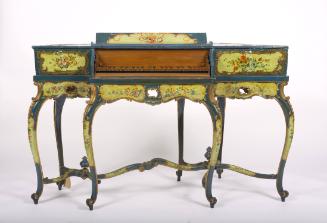
Photo credit: Don Kennedy
Francesco Bonafinis
c. 1560
Not available for use in Recording Studios
On View: On exhibit
isVirtual:

Photo credit: Don Kennedy
Gerri Schneider
20th Century
On View:
isVirtual:
Photo by Don Kennedy
CBS Masterworks
20th Century
Not available for use in Recording Studios
On View: Not currently on exhibit
isVirtual:
Photo credit: Don Kennedy
Hohner Musikinstrumente GmbH & Co. KG
c. 1967
Available for use in Recording Studios
On View: Not currently on exhibit
isVirtual:
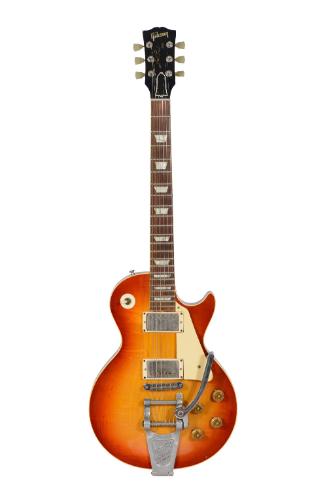
Photo credit: Don Kennedy
Gibson Guitar Corporation
1959
Not available for use in Recording Studios
On View: Not currently on exhibit
isVirtual:
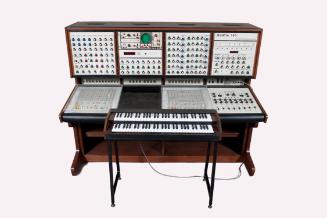
Photo credit: Don Kennedy
Electronic Music Studios (London) Limited
1972
Available for use in Recording Studios
On View: Not currently on exhibit
isVirtual:
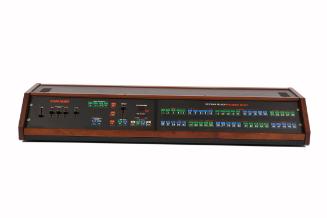
Photo credit: Don Kennedy
CBS Musical Instruments
c. 1982
Available for use in Recording Studios
On View: Not currently on exhibit
isVirtual:
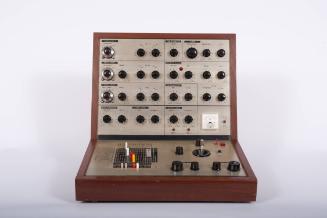
Photo credit: Don Kennedy
Electronic Music Studios (London) Limited
1969
Not available for use in Recording Studios
On View: Not currently on exhibit
isVirtual:
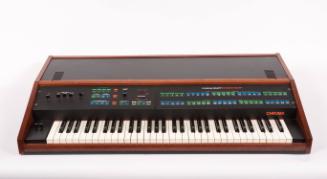
Photo credit: Don Kennedy
CBS Musical Instruments/Rhodes
c. 1982
Available for use in Recording Studios
On View: Not currently on exhibit
isVirtual:
Back