EN / FR
Skip to main content

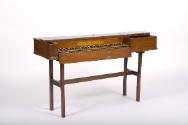
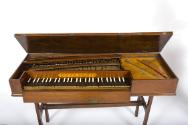
Zumpe Square Piano

Not available for use in Recording Studios
On exhibit
On exhibit
Artifact TypePiano, Square
Manufacturer Johannes Zumpe
Manufacturer LocationUnited Kingdom
Date1766

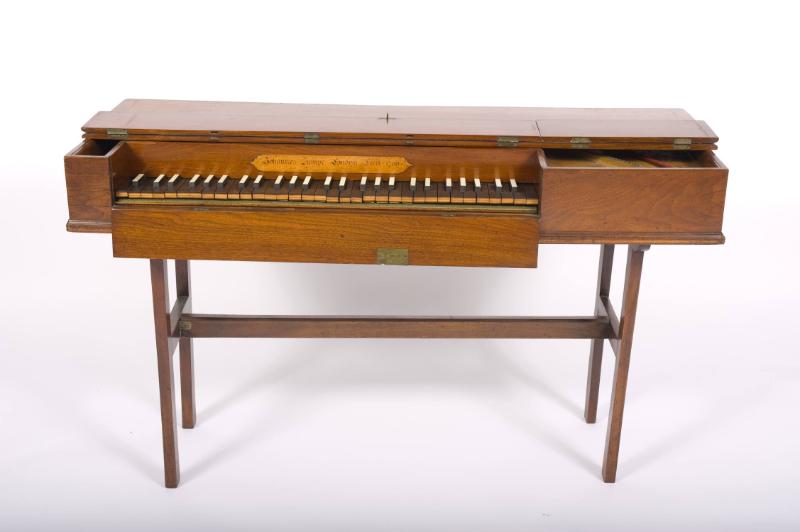
The square piano predated the vertical piano by nearly half a century—however, both were designed as cheaper, more accessible alternatives to the grand piano. Unlike the grand, the square piano orients its strings almost perpendicular to the keys rather than parallel to them. It was celebrated for its light, harpsichord-like sound. The piano’s maker, Johannes Zumpe, was a German émigré to England, and this particular instrument was one of the first square pianos ever produced in an English-speaking country.

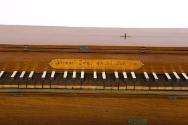
Fallboard inscription: 'Johannes Zumpe Londini fecit 1766'.

Operation/FunctionThis instrument is contained within a rectangular case and features leather hammers and felt dampers in its single-escapement action. A single hand-operated stop on the right side of the case controls the instrument’s damper mechanism. The keys of this piano would likely have been double strung (bichord) originally, however the instrument no longer contains strings. Keyboard compass of AA-f3 with ebony naturals and ebony accidentals covered with ivory. It is likely that an English common temperament would have been used in this instrument, as was often the practice in the eighteenth and nineteenth centuries in England. The cents deviation of this temperament from equal temperament is: C, 0 cents; C-sharp, -7.6 cents; D, -6.8 cents; E, -13.6 cents; E-flat, -13.6 cents, F, +3.4 cents, F-sharp, -9.6 cents; G, -3.4 cents; G-sharp, -5.6 cents; A, -10.2 cents; B-flat, +0.4 cents; B, -11.6 cents. A very similar instrument from the same maker, also dated 1766, exists in the collection of the Colonial Williamsburg Foundation in Williamsburg, Virginia; see attached PDFs for a comparison of differences in restoration.Cultural SignificanceSince establishing itself as a dominant force in the musical world during the late Classical period – when it effectively shifted the texture of an entire compositional language – the piano has remained among the most widely used and recognizable instruments, dually holding the honour of being the most recorded keyboard instrument in history. Although it is not generally known as being particularly inexpensive or portable, it is a highly adaptive and accommodating instrument, capable of penetrating the musical idioms of numerous genres ranging from classical and jazz to pop and experimental. Its sonic flexibility has mirrored its technological development, offering users increased control in terms of expression and articulation–controls that historical keyboard instruments such as the organ and harpsichord simply weren’t capable of executing. Equal temperament, which was developed largely in response to the rigid interface of the keyboard, became a vital component of the piano’s sonic character more so than in any other historical keyboard instrument; this tuning approach has, for better or for worse, remained the standard in Western music since the Baroque. By the beginning of the twentieth century, the piano had become the foremost domestic instrument, with developments in player piano and transposing technology reflecting an effort on part of the manufacturers of the time to reach an audience of amateur players; this shift in the social perception of the instrument subsequently helped proliferate it into popular music of the era. Still to this day, the piano is perhaps the only orchestral instrument that can be found in the middle-class European and North American homes of those who have not been trained in the conservatory or otherwise. Although the modern piano is a highly flexible instrument, many prefer to experience performances of period music on corresponding instruments of the era. Naturally, these instruments are apt to reflect the intentions of the composers and the aesthetic zeitgeist, so to speak, and can often disclose particularities in the music that may have been covered or altered by modernization. The square piano in particular represents the beginning of a concern for convenience that still remains in current times. Its popularity grew primarily as a result of its smaller size and lighter feel, and similarly, its demise in the late nineteenth century would come with the advent of the far more compact vertical piano.Technological SignificanceIn relation to the history of acoustic keyboard instruments, the technological importance of the piano simply cannot be overstated. The instrument can be seen as having developed from earlier chordophones such as the hammered dulcimer, which employed hand-held hammers to strike a series of horizontal strings, the harpsichord, a primarily Baroque instrument that implemented a series of wooden jacks to pluck the instrument’s strings when activated by the keyboard, and, the clavichord, a Renaissance instrument that directly appropriated the dulcimer’s design for use with a keyboard and a series of metal tangents, similar in concept to the hammers of the piano. The piano was invented in 1700 by Bartolomeo Cristofori (1655 – 1732), a harpsichord builder working in the Medici court in Florence, Italy. Cristofori’s most significant and defining contribution to the creation of the piano was his single-escapement action; the single-escapement action essentially modified the striking mechanism of the clavichord so as to allow the instrument’s hammers to return to their resting position immediately after striking the string. As a result, the string is able to resonate freely and produce a tone that is substantial in volume. Moreover, Cristofori’s design was oriented such that the hammer itself did not lift to the height of the string, which would result in a dampening of the sound; rather, the momentum induced by the wippen pushes the hammer upward from its maximum height to simply impact the string then fall downward naturally. The tangents of the clavichord are connected as levers to the keys; when activated, the tangent remains in contact with the string for as long as the key is held, absorbing a significant portion of the vibrations. As such, its tone is often rather muted and, thus, unsuitable for live performance. Cristofori’s piano was able to produce a larger sound akin to that of the harpsichord, however, in employing a struck rather than plucked action, it was also capable of producing expressive and nuanced variations in its articulation, tone, and dynamics. Although most sophisticated harpsichords implemented stops and multiple manuals that allowed the performer to vary the depth of the sound field to a certain extent, they were, by and large, incapable of offering any meaningful dynamic control. Cristofori is also credited with the creation of the backcheck mechanism, which prevents the hammer from repeated bouncing, which could result in an unwanted second striking of the string. The backcheck is a small component that stops the hammer in a slightly raised position as it falls back to a resting position, thus dissipating any residual momentum. Moreover, Cristofori replaced the blunt edge of the clavichord’s metal tangents with a circular coil of paper covered in leather. This padding made the hammer’s impact with the string softer, thereby emphasizing the resonance of lower harmonics in the strings vibrations and resulting in a richer tone. Cristofori also incorporated a dedicated bracing system for the instrument’s soundboard, allowing it to remain unaffected from changes in string tension. Thanks to the distribution throughout Germany in 1725 of an article translated from Italian that detailed Cristofori’s invention, the highly innovative and revolutionary approach caught on with instrument builders across another major production centre of harpsichords within the European continent. Among those who were most influenced by this design was the German harpsichord and organ builder Gottfried Silbermann (German, 1683 – 1753), who effectively produced copies of Cristofori’s instrument throughout much of the 1730s. Silbermann did expand upon the design, however, with the addition of the first damper pedal mechanism; each key contains its own damper, which lifts when the note is depressed and lowers when the note is released, thereby stopping any residual vibrations in the string, however activating the pedal mechanism allows the dampers to remain lifted even after the note is released, with the sound decaying naturally. An active piano building tradition soon developed in neighbouring Austria, resulting in what became known as the Viennese school. Viennese pianos continued Cristofori’s bichord voicing (two strings per note), but incorporated improved leather-tipped hammers and, in certain later instruments, a reversed striking orientation, with the hammers striking away from instead of toward the performer. Viennese instruments from the late eighteenth century are generally characterized as having a decidedly soft or gentle tonal quality. With the rise of the Industrial Revolution in the early and mid nineteenth century, the piano underwent a series of significant design and construction developments toward becoming its modern incarnation, including improvements in string material and orientation, the creation of the all-important cast-iron frame, the extension of the keyboard compass, the standardization of chorused voicing, the implementation of cross-stringing in bass strings, and the incorporation of a more flexible double-escapement action. These changes were subsumed by companies such as Broadwood and Sons of England, Sebastian Érard and Pleyel et Cie of France, and Steinway and Sons, Alpheus Babcock, and Chickering and Sons of the United States. Broadwood pianos were the first to extend the compass of the keyboard to the now-standard seven-octaves. In the 1820s, Paris replaced Vienna as the epicenter of piano building thanks to the contributions of manufacturers such as Érard Frères and Pleyel et Cie. In 1821, Sebastien Érard introduced the double-escapement action, which employed a repetition lever that allowed the hammer to strike again without having to first return to a resting position. This enabled the player to perform successive notes in a comparatively faster progression, which was well suited to an era characterized by the virtuosic solo piano works of composers such as Franz Liszt and Frédéric Chopin. Typically, instruments employing the earlier single-escapement action are referred to as fortepianos, while those employing the modernized double-escapement action are referred to as pianos. Single-escapement action remained in occasional use until the very early twentieth century; all modern pianos implement double-escapement. Another French builder, Henri Pape, replaced the leather-tipped hammer covers with the more expressive compressed felt-tips in 1826. The first wave of mass immigration by Europeans to the United States occurred in the early nineteenth century, resulting in a number of manufacturers settling on the country’s east coast. Notable among these were the firms of Steinway and Sons of New York City, and Alpheus Babcock and Chickering and Sons, both of Boston. Although the Americans introduced a number of significant improvements – including the cross-stringing of bass strings to create an optimal balance between tone and the size of the instrument, which was patented by Steinway in 1859, and chorused voicing – their greatest contribution was without doubt the implementation of the cast-iron frame. The cast-iron frame was first patented in 1825 by Alpheus Babcock, and introduced into the structure of the soundboard so as to enable substantially greater amounts of tension, resulting in a massively improved tone. Iron was favoured over other metals due to its ease of use, flexibility, and resistance to deterioration and manipulation. Piano strings were correspondingly designed to be thicker and in greater number, with the instrument’s upper register accommodating three strings per each note. The design approach put forth by the American manufacturers in the mid-nineteenth century was soon adopted by the majority of international builders and has largely remained the standard. Beginning in the late eighteenth century, two alternate designs emerged as variations of the harpsichord-shaped “grand” case characteristic of early fortepianos: the square piano and the vertical piano. The development of the square piano is often attributed to both Silbermann and Zumpe, though, of course, Zumpe is credited with formatting the earliest square piano action, which became known as the “English single”. Square pianos were used extensively throughout the late eighteenth and early nineteenth centuries, and were lauded for their being relatively inexpensive, smaller than their fortepiano counterparts, and generally more accessible to the burgeoning middle class. The English design put forth by Zumpe served to influence most other European builders of square pianos on the continent, particularly those working in Germany. In France, however, the exterior design of the instrument’s legs was viewed as being clumsy and would often be replaced in a Louis XV style to suit the Parisian aesthetic. Although Zumpe’s design largely remained the standard, it was not without fault; maintenance of these instruments was particularly difficult in that replacing the strings required complete removal of the damper mechanism. As such, several subsequent builders sought to improve the action throughout the early nineteenth century with many of the major piano manufacturers of the time, such as John Broadwood and Sons and Érard, also producing their own series of square pianos that varied in both interior construction and exterior design. In order to meet the demands of a changing aesthetic throughout the early nineteenth century, the square piano began to experience a redesign that would allow it to accommodate a much larger and stronger tone. As such, this required the instrument to expand in size and weight, incorporating a metal frame, a larger compass, and significantly higher tension in the strings. Increasingly, the square piano began to take on many of the inconvenient vices of its grand counterparts, making it less appealing to the domestic market. The substantially more compact vertical piano emerged from the London workshop of Robert Wornum in the early 1800s, and by the end of the century, had far surpassed the square piano in popularity and usage. Vertical pianos are so-called because the frame, hammers, and strings are positioned vertically. Although the vertical stringing of these instruments – with the strings and soundboard placed behind and perpendicular to the keys and the tuning pins placed at the bottom of the instrument – still resulted in a poorer tone quality than that of the contemporaneous fortepiano and grand pianos, the vertical piano was regarded as being commercially superior to the square in its requiring less physical space. By the early twentieth century, the square piano had fallen into relative disuse. Vertical pianos, which were manufactured in large numbers throughout the United States and Western Europe, continued to enjoy numerous improvements and experiments in their design throughout the nineteenth and very early twentieth centuries, which saw the creation of the cabinet vertical between 1805 and 1840, characterized by its extensive height and straight stringing, and the cottage vertical from around 1815 until the early twentieth century, characterized by its shorter height, as well as the oblique vertical in the 1820s, which incorporated diagonal stringing throughout as opposed to the straight or cross (combination of straight and diagonal) stringing seen on the majority of all other vertical pianos of the time, and the spinet vertical from the 1930s, which employed an unusually low hammer position with drop action to maintain a reasonable keyboard height. In fact, for a short period of time towards the end of the nineteenth century, workshops specializing in the production of cheaper, less complex, and smaller pianos became exceedingly active in England in what has been referred to as a “cottage industry”; indeed, this certainly helped promote the prevalence of the piano in home life as was experienced in the early twentieth century, catering to the middle class. What began as an instrument designed exclusively for use within the Medici courts in Florence, Italy had, over the course of less than two centuries, become the ubiquitous domestic instrument. High-end instruments from prominent builders continued production concurrently, seemingly unaffected by the increase in demand for cheaper instruments. It is interesting to note that while the materials required for the sound-producing mechanisms of both vertical and grand pianos were relatively cheap to manufacture or purchase, outer materials, such as hardwood veneers, exotic veneers, and intricate carvings, were also unusually inexpensive at the time. Although nearly every piano of the late nineteenth century, regardless of quality, was produced with the sorts of ornate designs typical of the Victorian era from which they emerged, their outer splendor had disappeared by the early twentieth century to suit a changing aesthetic that favoured simple and clean design. In the twentieth century, pianos have continued to develop into a number of forms, including that of the player piano and the electric piano.Users/PerformersThe square piano was quite popular upon its emergence in the late eighteenth century, with many notable composers of the day seeking to own one, using it for both performance and composition. Composers to have used instruments very similar to this particular artifact – perhaps even units made by the same maker – include Johann Christian Bach, Christoph Gluck, Muzio Clementi, and Giovanni Paisiello. Many women of nobility, including Queen Charlotte of England, Marie Antoinette of France, and Empress Catherine of Russia, were also devoted to the use of the square piano, using it in their homes to entertain and accompany songs.
Object number2007.06.01
Photo credit: Don Kennedy
Joseph Johannes Couchet
1679
Not available for use in Recording Studios
On View: On exhibit
isVirtual:
Photo credit: Don Kennedy
Louis Dulcken II
1791
Available for use in Recording Studios
On View: Not currently on exhibit
isVirtual:
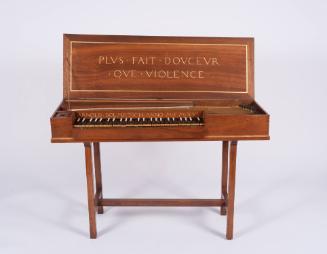
Photo credit: Don Kennedy
Arnold Dolmetsch
1926
Not available for use in Recording Studios
On View: On exhibit
isVirtual:
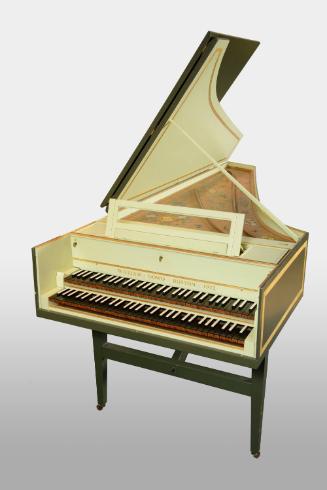
Photo credit: Don Kennedy
William Richmond Dowd
1972
Available for use in Recording Studios
On View: Not currently on exhibit
isVirtual:
Photo credit: Don Kennedy
Hammond Organ Company
1957
Not available for use in Recording Studios
On View: Not currently on exhibit
isVirtual:
Photo credit: Don Kennedy
Venczel József Schunda
c. 1905
Not available for use in Recording Studios
On View: Not currently on exhibit
isVirtual:
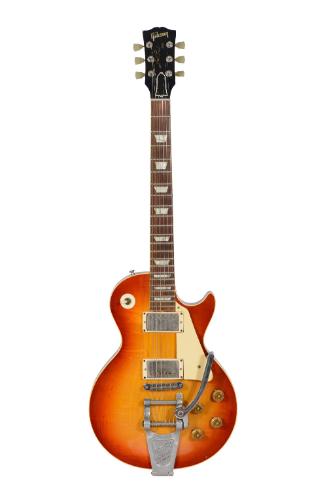
Photo credit: Don Kennedy
Gibson Guitar Corporation
1959
Not available for use in Recording Studios
On View: Not currently on exhibit
isVirtual:
Photo credit: Don Kennedy
Kazuo Yairi for CBS Masterworks
20th Century
Available for use in Recording Studios
On View: Not currently on exhibit
isVirtual:
Photo credit: Don Kennedy
The Aeolian Company, Ltd.
c. 1910
Not available for use in Recording Studios
On View: Not currently on exhibit
isVirtual:
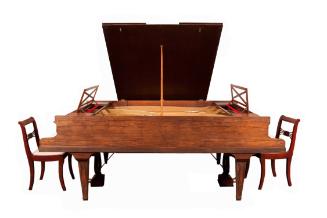
Photo credit: Don Kennedy
Pleyel et Cie
1913
Not available for use in Recording Studios
On View: Not currently on exhibit
isVirtual:
Photo credit: Don Kennedy
Bösendorfer Klavierfabrik GmbH
1938
Not available for use in Recording Studios
On View: Not currently on exhibit
isVirtual:
Photo credit: Don Kennedy
On View: Not currently on exhibit
isVirtual:
Back