Garnet "Gar" Gillies
as told to Chris Bilton
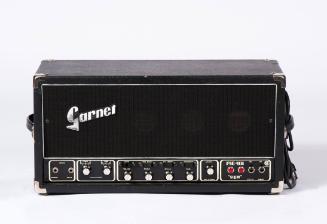
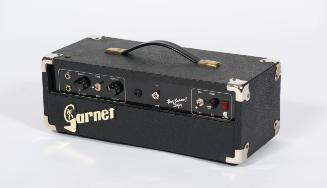
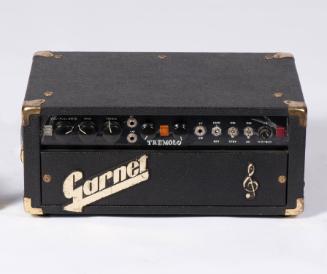
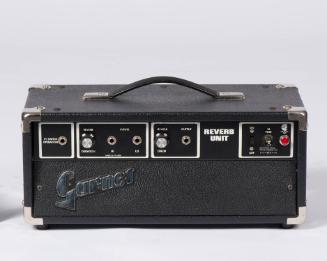
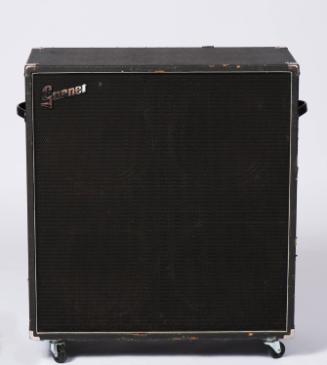
As an electrical engineer and a musician, Gar Gillies was the perfect person to solve problems of sound—namely, how to get more of it. Early on, as a jazz musician, he created a six-channel mixer to amplify the entire band at a time when most people would only mic the singer. And when a young Winnipeg rock ’n’ roll guitarist named Randy Bachman was looking to get a more powerful distortion tone without destroying his gear, Gillies created a pre-amp called the Garnet Herzog in his modest electrical repair shop. The Herzog would be heard around the world on the Guess Who’s “American Woman” and Garnet amps would come to be associated with the robustly overdriven rock ’n’ roll of the Winnipeg sound in the 1960s. Since the company closed up shop in 1989, the amps have become sought-after items.
IN DEPTH
Gordie Johnson of Big Sugar/Grady on his love-affair with Gar Gillies’ Garnet gear:
Garnet amps were just another flavour from my childhood. If we went to someone’s house to jam, somebody had some Garnet gear or some Traynor gear. I didn’t really encounter it again until probably the late 1990s. My Traynors had just gone up in a puff of smoke and I was breaking Marshall stuff left and right. I carried a licensed electrician with me because there was always something that had to be fixed with them—it was like running some exotic racecar or something. I guess I’m just rough with my toys. So, I needed to find a more sustainable approach to rocking.
Garnet amps would come to be associated with the robustly overdriven rock ’n’ roll of the Winnipeg sound in the 1960s.
The first Garnet Herzog [I ever played] I found by accident. I was in a shop on Queen Street in Toronto, which is no longer there, called Songbird. I walked in and there it was—and I was like, ‘I know Garnet, but what is that thing?’ They were like, ‘I don’t really know. It’s kind of an amp but not really.’ And I was like, ‘For $100? Sold.’
I thought if I had an amp that could take the volume output, that thing just made perfect sense to me tonally. It was just a very simple pre-amp with no tone control—just the shortest route between A and B. From being a bass player, I had a storage locker full of Ampeg SVTs [bass amps]. So I took one of those [SVT bass amps] and I used the Garnet as a pre-amp. So: guitar into the Herzog, Herzog into the Ampeg, Ampeg into two 4×12 cabinets. And, oh my god. Oh my god! The day I did that . . . And I did not have an amp break down or electrical issue for 10 years! Whatever I plugged it into sounds exactly the same: there’s my tone, every night.
I’ve taken it to amp repair guys down here in the States and they open it up and go: ‘Wow, there’s nothing in here. How can it sound so crazy good?’ There’s something to the simplicity of it. It’s an elegant design.
And Gar Gillies was a sweetheart, man. I would go in and visit him every time I played in Winnipeg. I’d go down those little back streets and find his TV repair shop and go in there. I can’t tell you how many times he’d take his lunch out of a brown paper bag and put a bunch of tubes in the paper bag: “Take those in case you need them.” He took my stuff apart a couple of times—there was nothing wrong with it—just bringing it back to its maker. He’d look in there and be like, ‘Oh, yeah, it’s still working good.’