EN / FR
Skip to main content

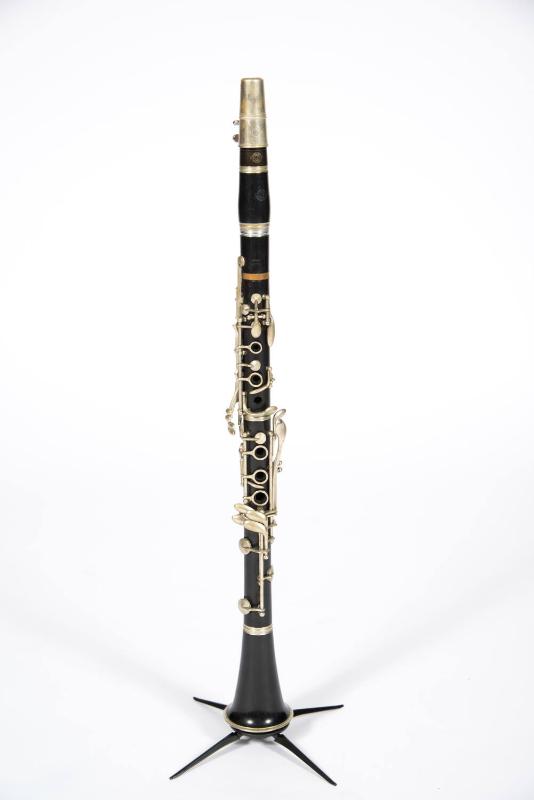
Mart Kenney Clarinet

Not available for use in Recording Studios
On exhibit
On exhibit
Artifact TypeClarinet
Manufacturer LocationFrance
Datec. 1930

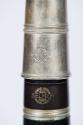
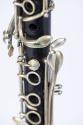
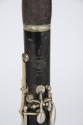
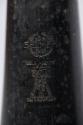
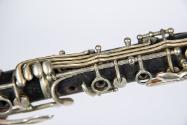
Canadian jazz musician and big band leader Herbert Martin “Mart” Kenney once owned this standard clarinet. A clarinetist and saxophonist, Kenney formed his first big band in 1931—originally a septet, Mart Kenney and his Western Gentlemen eventually swelled to 30 members and regularly toured the country until Kenney’s retirement in 1969. The clarinet itself was built by Henri Selmer Paris, the award-winning manufacturer of woodwind and brass instruments that celebrated its 130th birthday in 2015.


Donated by the Kenney family

Operation/FunctionThis particular instrument is a standard clarinet that contains a mouthpiece and reed component and upper and lower joints spanning seven pitch holes.Cultural SignificanceThe clarinet holds a unique timbre that has been likened to the human voice, and has come to define styles formed in both classical and non-classical genres, such as jazz, big band, and klezmer. It remains a widely used solo instrument within these genres, though it is typically not found in the popular spheres of rock, pop, and country music.Technological SignificanceThe clarinet is widely regarded to have been invented in the late eighteenth century, originating in Germany from the builder Johann Denner. It developed from a Baroque instrument known as the chalumeau, which is the term now given for the lower register of the modern clarinet. Structurally, it shares many similarities with early single-reed and horn instruments from the Middle Ages and parts of the Mediterranean. The most important feature of the modern clarinet, which distinguishes it from earlier designs, is in relation to the pads it employs for covering holes. The earliest instruments employed felt pads that were inefficient, allowing air to leak through. As such, they could not be widely relied upon, making it difficult for the instrument to sound every single pitch with a desirable tone. As a result, early clarinets were limited in the number of key signatures in which they could play. To compensate, the various transpositions of the clarinet, including the B-flat, A, and C, were developed. The felt pads of earlier instruments were modified and replaced in around 1800, allowing the instrument to be performed in a wider variety of key signatures. Although multiple transpositions of the instrument are generally no longer needed, both the B-flat and A clarinet have persisted due to the amount of canonic historical music that has been composed to incorporate both.Users/PerformersThis particular artifact was formerly owned by Canadian jazz musician and big band leader, Mart Kenney. Kenney was born Herbert Martin Kenney on 7 March 1910 in Toronto, Ontario and began playing both clarinet and saxophone at an early age, performing throughout Toronto and, later, Vancouver, British Columbia. He formed his first and most well-known dance band, The Western Gentlemen, in 1931 with Glen Griffith (trumpet, piano), Jack Hemmings (trumpet), Bert Lister (saxophone), Hec MacCallum (bass), and, later, Ed Emel (percussion) and Art Hallman (saxophone, vocals, piano). The group debuted on CJOR radio in 1934 and began a three-year seasonal performance contract at the Waterton Glacier International Peace Park in southern Alberta. Airplay on CBC radio throughout 1934 led to cross-Canada tours with regular performances at Canadian Pacific Railway hotels including Vancouver’s Hotel Vancouver and Toronto’s Royal York Hotel. A recording contract with RCA emerged in 1938, having produced approximately twenty-five 78s by 1951. The number of musicians in the group, which had relocated in 1940 to Toronto and come to be known simply as Mart Kenney and His Western Gentlemen, varied over the following years, expanding at its largest to 30 members. Although their popularity remained centered in Canada, broadcasts of their recordings were picked up by CBS and NBC in the United States and by the BBC in the United Kingdom. Kenney shifted into retirement in 1969, settling in Mission, British Columbia. Although his group was no longer active during this time, Kenney himself continued to make guest appearances in the metro Vancouver area throughout the 1970s and 1980s. Among his awards and recognitions are the member of the Order of Canada (1980), and an honorary LLD from the University of Lethbridge (1985). Kenney passed away on 8 February 2006. The music of Mart Kenney and His Western Gentlemen was regarded as being neither too “sweet’ not “swinging”, leaving their greatest impact on the public during the war years. Their most successful release remains The West, a Nest, and You, Dear, which was recorded for RCA in 1938.
Object numberT.2016.09.02
Photo credit: Don Kennedy
Henri Selmer Paris
c. 1935
Not available for use in Recording Studios
On View: Not currently on exhibit
isVirtual:
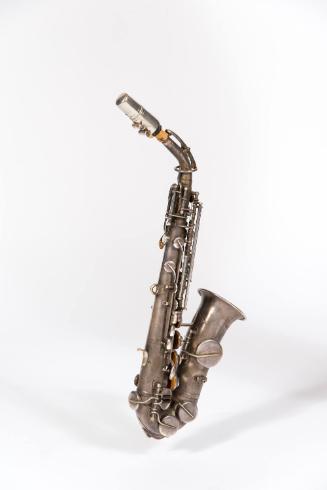
Photo credit: Don Kennedy
Buescher Band Instrument Company
1923
Not available for use in Recording Studios
On View: On exhibit
isVirtual:
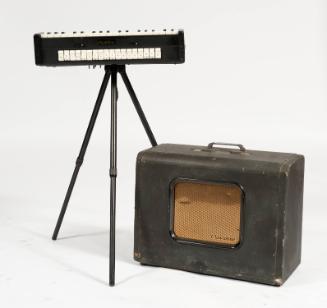
Photo credit: Don Kennedy
Selmer (UK)
1957
Available for use in Recording Studios
On View: Not currently on exhibit
isVirtual:
Photo credit: Don Kennedy
Drum Workshop, Inc.
2009
Not available for use in Recording Studios
On View: On exhibit
isVirtual:
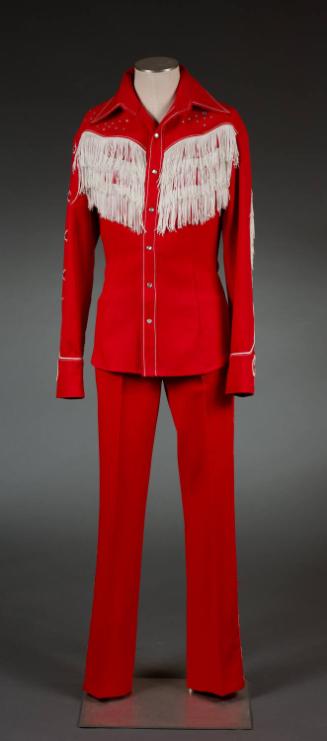
Photo credit: Don Kennedy
Gerri Schneider
20th Century
On View:
isVirtual:
Photo credit: Don Kennedy
Garnet "Gar" Gillies
1965 through 1980
Not available for use in Recording Studios
On View: On exhibit
isVirtual:
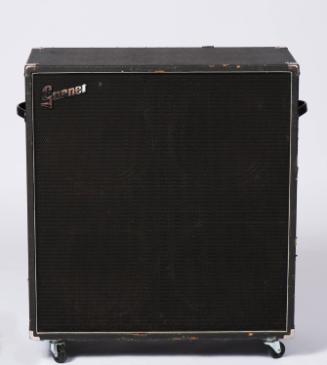
Photo credit: Don Kennedy
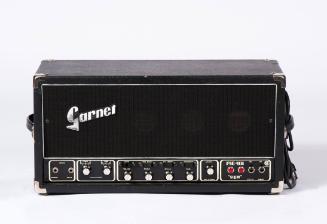
Garnet "Gar" Gillies
Available for use in Recording Studios
On View: Not currently on exhibit
isVirtual:
Photo credit: Don Kennedy
Ovation Guitar Company
20th Century
Not available for use in Recording Studios
On View: On exhibit
isVirtual:
Back